Showing posts with label Mental Health. Show all posts

Monday, May 23, 2016

Pehchān conundrum

Insight, May '16
Pehchān, an ambitious civil society-government partnership to provide sexual and reproductive health, HIV, legal aid and social security services to nearly 4,50,000 sexual and gender minority people in India, has drawn to a close. Its scale and implementation attracted both praise and criticism, but the completion of its term will leave behind a vacuum feel Anupam Hazra and Souvik Ghosh of SAATHII, a national NGO that implemented the programme in eastern India

Solidarity event organized by Dinajpur Notun Aalo Society at
Jibonmore, Islampur in Uttar Dinajpur district
Kolkata, May 2016: Even as we write this, West Bengal is counting votes cast for a Legislative Assembly election, and by the end of this month a ‘new’ state government may well be in place. But what will be new about it from the public health perspective? Will the five-year cycle of polls yield fresh hope for some of the most marginalized communities like transgender women, Hijras and men who have sex with men (MSM)? Barring one or two political parties, none seem to have included their socio-economic and associated concerns in the election manifestos. One party fielded two transgender women as candidates from prominent seats in Kolkata, but how respectful was such inclusion is open to debate (the candidates withdrew from the contest in protest against what they felt was tokenism and a publicity stunt).

Sunday, May 22, 2016

Does disability need divinity?

Happenings, May '16
Shampa Sengupta reports on a consultation titled ‘From Handicapped to Divyang: Politics of Identity’ held at Jadavpur University, Kolkata earlier this year

Consultation at Jadavpur University. Photo credit: Sruti Disability Rights Centre

Kolkata, March 16, 2016: In December last year, in a radio show named Mann Ki Baat, Prime Minister Narendra Modi referred to persons with disabilities as ‘divyang’ (divine body). This generated much debate in the country, and in light of this, the School of Media, Communication and Culture, Jadavpur University and Sruti Disability Rights Centre teamed up today to organize a consultation on the ‘politics of naming’ persons with disabilities.

Sunday, April 24, 2016

Star quest: Fighter with a heart

Clickhappy! Star Quest, Apr '16
By Kaustav Manna

Star of the month: Anurag Maitrayee at the 'Kolkata Rainbow
Pride Walk 2011'. All photo credits: Nilanjan Majumdar
Star Quest is a series of photo-stories of individuals who may not be public figures like politicians, artistes, social activists or media persons, but have in their own way contributed to social equity and empowerment around gender, sexuality and related issues.

The contribution of the ‘stars’ we zoom in on may be in an intimate arena – among friends and neighbours, their local community, a village or slum school, their own work place and so on. It may not have attracted any media attention, yet the importance of their efforts cannot be underscored enough. Varta is happy to bring to light such hidden ‘stars’ and focus on endeavours that generate hope for a better present and future.

Monday, March 21, 2016

Decoding consent

Happenings, Mar '16
Cracking the consent conundrum was the focus of a panel discussion organized by Civilian Welfare Foundation, Kinky Collective and Varta Trust last month in Kolkata. Pompi Banerjee reports

Kolkata, February 20, 2016: Nearly 30% out of 71 people felt that the age of sexual consent in India should be 15 years. Almost 25% agreed that long-term intimate partners need not explicitly seek verbal consent every time they wanted to have sex with each other, another 30% were undecided. Among those who clearly disagreed with this statement, there were far more women than men. Not saying no or not resisting advances implies consent for sex – only 54% of the audience disagreed with this statement. Consent for sex can be withdrawn at any point of time – 79% agreed, but 21% did not or were undecided, which was equally worrying!

Photo credit: Arunabha Hazra

When the mind disassembles

My Story, Mar '16
Dementia is the focus of Pallav Bonerjee’s next in a series of personal narratives on psychology, people and destiny

Many of you will have encountered this nebulous term called ‘dementia’. Unfortunately, it is becoming a rather familiar term these days. Dementia is a collection of symptoms essentially as a result of a chronic degenerative disease of the brain. These symptoms can include disturbances in memory (short-term memory), orientation and comprehension, calculation, learning capacity, language, thinking and judgement. There is currently a great deal of academic and clinical interest (both national and international) in trying to find a cure for this disorder, which mostly affects the elderly (typically, post 65 years of age).

Graphic credit: Pallav Bonerjee, Prosenjit Pal

The most common cause of dementia is Alzheimer’s disease, which was first discovered in 1906. Since then we have had over a 100 years to identify a cure and we haven’t been able to reach there yet. Just to give you a picture of the magnitude of its impact, currently around 35 lakh people in India have Alzheimer’s dementia. It is estimated that this number will double in the next 15 years. According to the February 2016 issue of TIME Magazine, “Globally, nearly 50 million people are living with dementia, most of which is caused by Alzheimer’s and in the absence of effective drugs and other interventions, this number is expected to double every 20 years”. Now, that is not a pretty picture.

Friday, January 22, 2016

Reconnecting – please don’t wait!

My Story, Jan '16
Continuing a series of personal narratives on psychology, people and destiny, Pallav Bonerjee writes about his epiphany of the New Year – the secret to a good life

The New Year did begin with a bang. We had barely recovered from celebratory hangovers and sat down with our new list of resolutions and there was already a parallel list of incrementing stressors, setting in a flavour for the times to come. Delhi’s toxic air was crowned once again as the worst possible in the world. This led to a new ‘odd-even’ formula for taking cars out on the streets for the first 15 days of the month in the entire National Capital Region. This led to many interesting discussions, jokes, fan fare, heated debates and public opinion polls. Eventually, we gave in and settled down.

Saturday, November 21, 2015

Changing houses (and perspectives)

My Story, Nov '15
In this chapter of a series of personal narratives on psychology, people and destiny, Pallav Bonerjee holds forth on the virtues of moving house – across localities and cities

Author (right) with his sister in childhood. All photographs
shared by author from his family albums
My earliest memories of changing our residence belong to a time when I was all of six years age and lived in Calcutta. My world comprised of my parents, a younger sister, grandparents and plenty of cousins. Life was perfect. My sister was in pre-school and I was in class one. We had made some friends in school. And then, all of a sudden, we got news that my father would have to transfer to a city called Raipur in Madhya Pradesh (now the capital of Chattisgarh). Being young and ambitious, my father had said “Yes!” My sister and I were told that since he was in a transferable job, we must get used to such changes. It would help us ‘in the long run’. At six, I had no idea what that long run could have meant. Though I have no distinct recollection, I’m sure I must have tried to dissuade my father from going ahead with this ‘opportunity’ citing reasons that ranged from “How would we manage without speaking Bengali or eating Bengali food?” to “What would happen to all our friends and cousins without us?”. It didn’t help.

Tuesday, September 22, 2015

Living on the edge

Vartanama, Sep '15
By Pawan Dhall

Who would have thought that an airport security check would have been the most adrenaline- generating moment on a recent trip to wondrous Manipur? The purpose of the trip was to interact with mental health professionals on issues concerning lesbian, gay, bisexual and transgender (LGBT) communities in a seminar. While there was a good exchange of ideas and experience during the post-event networking and it was heartening to see queer concerns gaining currency among mental health professionals and researchers in the state, there were no pointed questions or clarifications sought in the seminar itself. It could have been the auditorium acoustics, political correctness or my presentation was just not invigorating enough. But one was left wanting for greater engagement on the matter, especially when queer individuals across India continue to report negative encounters with mental health professionals.

Battling the depression demon

My Story, Sep '15
Pallav Bonerjee continues his series of personal narratives on psychology, people and destiny, this time in collaboration with a patient who provides his perspective on depression

All photo credits: Vahista Dastoor
When I started collecting my thoughts on depression as a mental illness and how strongly it affects the life of an individual, I couldn’t help falling back on some of the many anecdotal instances narrated to me by patients during their interactions with me as a therapist. I have tried to recreate some of them here with the intention of allowing others a glimpse into the life of an individual suffering from depression. I have also tried to collaborate for the first time with a patient who I felt could provide a unique and invaluable perspective on depression.

Monday, July 20, 2015

Intimacy, family and violence in queer lives

Insight, Policy Matters, Jul '15
By Pawan Dhall

Intimate partner violence or family violence, not quite alien facts of life, with news headlines and television serials full of one or the other! Victims of intimate partner violence are often women, sometimes men; while family violence seems to affect inter-racial, inter-caste or inter-religious couples at an alarming frequency. But this is only part of the reality around intimate partner and family violence.


What if the violence is between two males in an intimate relationship, or between a Hijra and her male lover? What if the family violence is directed at a son who would rather be a daughter? Or how do you help trans women who face relentless physical and emotional abuse at home because of their gender non-conformity, and then face it also from male intimate partners to whom they turn to for solace and love? Equally importantly, why does such violence happen, what is its impact and how can it be reduced, if not eliminated?

Through the prism of gender diversity

My Story, Jul '15
Pallav Bonerjee continues his series of personal narratives on psychology, people and destiny, this time on the need to do away with biases around gender and sexuality

Artwork credit: Himanshu Patra
From our very early childhood years, we are taught by our parents, elders and teachers to evaluate almost everything from the ‘good-bad’ and ‘right-wrong’ perspective. It is an essential component of the socialisation process, where we learn to stay away from the ‘bad/wrong’ and work towards all that is considered ‘good/right’ for us. Through consistent use of rewards and punishments, we are primed to identify objects, activities, places, events, situations and people through that very same lens, judging them quickly and modifying our actions accordingly. We hardly ever try to find the basis of these evaluations, mainly because we may be too young to ask at the time they are being formed. Gradually, they become part of our value systems and belief patterns, thereby shaping our attitudes. It is a very efficient process; one that helps us with decision making on a day-to-day basis effortlessly. So that, effortful thinking is preserved mainly for the more important and bigger decisions that would affect our lives.

Saturday, June 20, 2015

Challenging queer ‘cures’

Insight, Jun '15
Psychiatrist Dr. Ujjaini Srimani, advocate Kaushik Gupta and social activist Bappaditya Mukherjee on how to tackle grievous, illegal and unethical attempts to ‘cure’ queer persons

Reshma is 19 and lives in Tangra, Kolkata (some markers of identity changed to maintain confidentiality). Reshma is a trans woman affected by relentless family violence because of her non-conforming sense of gender and attire – so much so that she has started contemplating suicide. Matters came to a serious head recently when she was beaten up by her brother and parents and threatened with eviction from home. This time she mustered the courage to report the matter to the local police station with assistance from Kolkata Rista, a Kolkata-based support forum for trans women. But she was in for a shock when the sub-inspector at the police station sided with her family members instead (though he did record a General Diary based on her complaint), and exhorted them to get her ‘treated’ for the ‘disease’ she was suffering from, even if force was required. If any doctor refused to treat her, he promised to speak to the doctor to ensure that Reshma got the ‘treatment’ she required to become ‘normal’ (euphemism for ‘heterosexual man’).

Wednesday, May 20, 2015

Senior living: Coming of age

My Story, May '15
Pallav Bonerjee on his tryst with psychology, people and destiny – the fifth in a series of personal narratives

Around June last year, I got an opportunity to acquaint myself with a new concept that seems to be catching up quickly with many elderly in India today. It concerns and seems to address many pressing issues that the elderly face on a daily basis. This concept is known as ‘senior living’ and it has nothing whatsoever to do with the traditional old age homes.

Saturday, February 21, 2015

A thought for Ma and Baba

Insight, Feb '15
By Pawan Dhall

“When I first came out to my family, it wasn’t the easiest of journeys – as is generally the case with many lesbian, gay, bisexual and transgender people. However, the basic difference that I found in my journey with so many others’ is that my mother, to whom I came out initially, never felt as if her dreams had been thwarted,” says Debjyoti Ghosh, a young advocate from Kolkata currently studying human rights in Budapest, Hungary.

A psychotherapist’s angst

My Story, Feb '15
Pallav Bonerjee on his tryst with psychology, people and destiny – the fourth in a series of personal narratives

I recently made a road trip with my wife to Jaipur. We were very excited about the trip and enjoyed it to the hilt. It was our first journey by road, together. Needless to say, I was also a bit anxious. Before embarking on the journey, I took half a day to get the car checked and serviced. The mechanic cleaned, serviced, tuned and checked the tyres thoroughly. Then he sat in the car for a test drive and as I drove, he primed his ears to a certain whirring noise that seemed to come from the rear right wheel of the car. Something wasn’t right. We got out and he put the car up on the ramp to inspect. After fiddling for a while he concluded that the wheel bearings had lived their life and needed to be replaced with new ones. He took about 15 minutes to fit in the new ones and voila, I was good to go! Neat job, you would say. I agree. But it also got me thinking.

Tuesday, October 14, 2014

Pushing boundaries

Vartanama, Oct '14
By Pawan Dhall

As I stood looking up at (and to) Goddess Durga in a popular South Kolkata Durga Puja pandal, the theme of a research paper I was writing on social and economic inclusion flashed past my mind. With her 10 arms resplendent with celestial weaponry, she looked extremely capable of protecting human kind from all directions and from all evils and miseries. Were the Government of India to start a large scale social and economic inclusion programme for the sexually stigmatized and criminalized communities, wouldn’t she make for an apt icon for the programme? Her 10 arms could also stand for a "Come one, come all" slogan!

Empathy – the magic dose

My Story, Oct '14
Pallav Bonerjee on his tryst with psychology, people and destiny – the second in a series of personal narratives

I immensely enjoy the process of observing, not because a student of psychology is primarily taught to do so, but since observation by itself is a fulfilling activity. It does not require a formal set-up or high-end tools. It can happen anywhere! I have, since the recent past, started believing that the process of psychological support or therapy may follow a similar path. It is possible to develop a therapeutic alliance or rapport with an individual in the strangest of contexts, even in the absence of a conscious desire to do so and even then, it serves the purpose – of support and help, and may even be extended to change aspects of an individual’s behaviour. The only essential ingredient is the ability to empathise.

Sunday, August 10, 2014

Fulfilment in mental health

My Story, Aug '14
Pallav Bonerjee on his tryst with psychology, people and destiny – the first in a series of personal narratives

I did not choose psychology. It chose me. It allowed me to fool around a bit after high school, attempting competitive exams to get into engineering colleges like most of my friends, without adequate preparation. It gave me sleepless nights when all the entrance exams that I took for engineering closed their doors on my face due to abysmal performance. It gave me a chill down my spine as my best friends started their academic curriculum in professional courses while I stood around clueless, not knowing how to get back to studies again. It made me feel terribly embarrassed in front of family and successful cousins. It got me wondering about subjects I never knew existed. It made be swallow my self-pride and pushed me into exploring colleges I wouldn’t have wanted to be seen dead in. And then, as I was almost about to give up hope, it gracefully accepted me.

Wednesday, April 09, 2014

Psychiatry and homosexuality

Insight, Advice - Mind, Body and Family, Apr '14
By Dr. Tirthankar Guha Thakurta

On February 8, 2014, the West Bengal chapter of the Indian Psychiatric Society organized an interactive event in Kolkata to clarify their stand on homosexuality (see A Mental Boost! in the February 2014 issue of Varta). Among a host of issues debated, one was the use of reference books with outdated information on gender and sexuality by students of the MBBS course, the future doctors of India. Varta decided to delve deeper into the matter, and Dr. Tirthankar Guha Thakurta brings you the second and final in a series of articles that analyse the content of some standard reference books (the first article – The Homophobic Doctor – was published in the March 2014 issue of Varta).

Caring for the caregiver

My Story, Apr '14
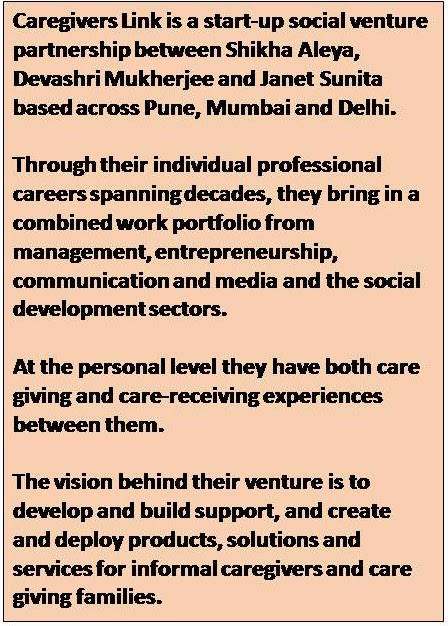
Shikha Aleya, a founder member of Caregivers Link, writes about informal caregivers and care giving, arguably the most intimate aspect of health care and probably the least appreciated

The room fills up fast though many people participating in the meeting walk slowly, carefully, with the help of mobility aids and the encouragement of family and friends. Some walk alone. There are smiles of recognition and greeting amongst those who have been here before. There is questioning and apprehension on some faces. There is sadness in many, just barely below the surface and that sadness will suddenly hijack the owner, embarrassing and scaring them in an outpouring of tears, a burst of hyper-ventilation. Then smiling faces, concerned, understanding faces, will emerge like many suns from behind the one cloud, to hold, to help, to cajole the hijacked one back into coping. Sometimes this works, to some degree, and sometimes it doesn't.